Quick Summary
- The POS records every sale, void, and drawer open, and ties each one to a specific employee, so there’s no way to stay anonymous
- Register controls catch things like a drawer opening without an actual sale, stopping cash theft before it piles up
- Live inventory tracking spots missing stock fast, in days instead of months
- Barcode scanning cuts out manual counting and connects deliveries straight to inventory
- Checking deliveries and verifying age at checkout covers both stolen stock and legal risk
- None of it works on its own, though. Checking drawers daily and reviewing reports weekly is what actually makes it effective
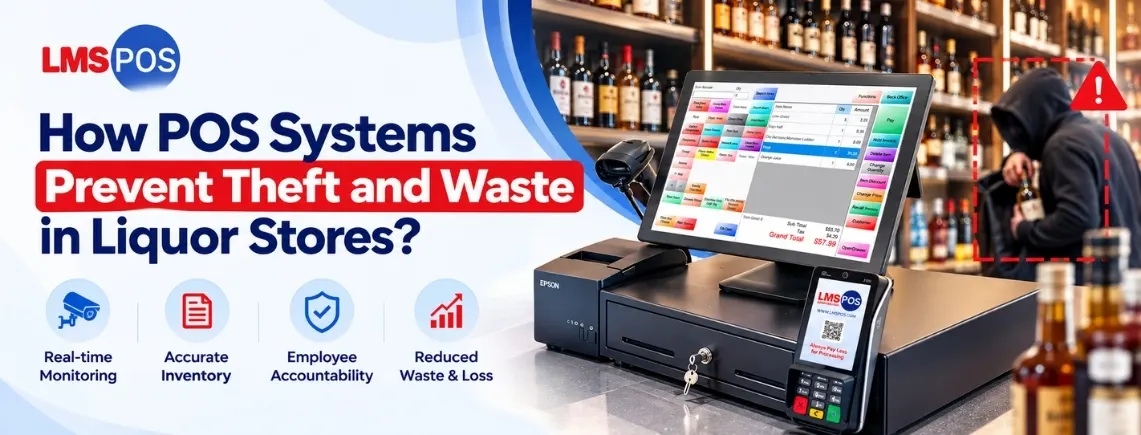
POS systems prevent theft and waste in liquor stores by logging every sale, void, and drawer open to a specific employee; tracking inventory in real time through barcode scanning; and flagging discrepancies like no-ring sales or stock gaps before they turn into bigger losses.
That’s the real value of a good liquor store POS system. Not extra software for the sake of it, but visibility into the exact spots where theft and waste usually go unnoticed, before a missed count or an unflagged discount quietly turns into a monthly number nobody can explain.
Why Liquor Stores Are a Prime Target for Theft and Waste?
Liquor stores sit at an odd intersection. The products are small, expensive, and easy to resell, and most transactions still involve a fair amount of cash. That combination creates more than one way for losses to slip through.
A few reasons liquor stores are especially exposed:
- Bottles are compact and easy to conceal, which makes shoplifting simple compared to bulkier retail items
- High resale value makes premium bottles a direct target, not just a random grab
- Heavy cash transactions open the door to register-level theft that has nothing to do with shoplifting
- Bottles get broken or mishandled during restocking, which quietly adds up as waste
- Product gets miscounted during manual inventory checks
- Promotions and discounts get applied incorrectly and go unnoticed until the monthly numbers look off
None of this is dramatic on its own. But without a system watching for it, these small losses compound fast over a year.
A liquor store inventory management system built into your POS gives you visibility into all of this at once, instead of chasing each problem separately after the fact.
The Core POS Features That Stop Theft and Waste
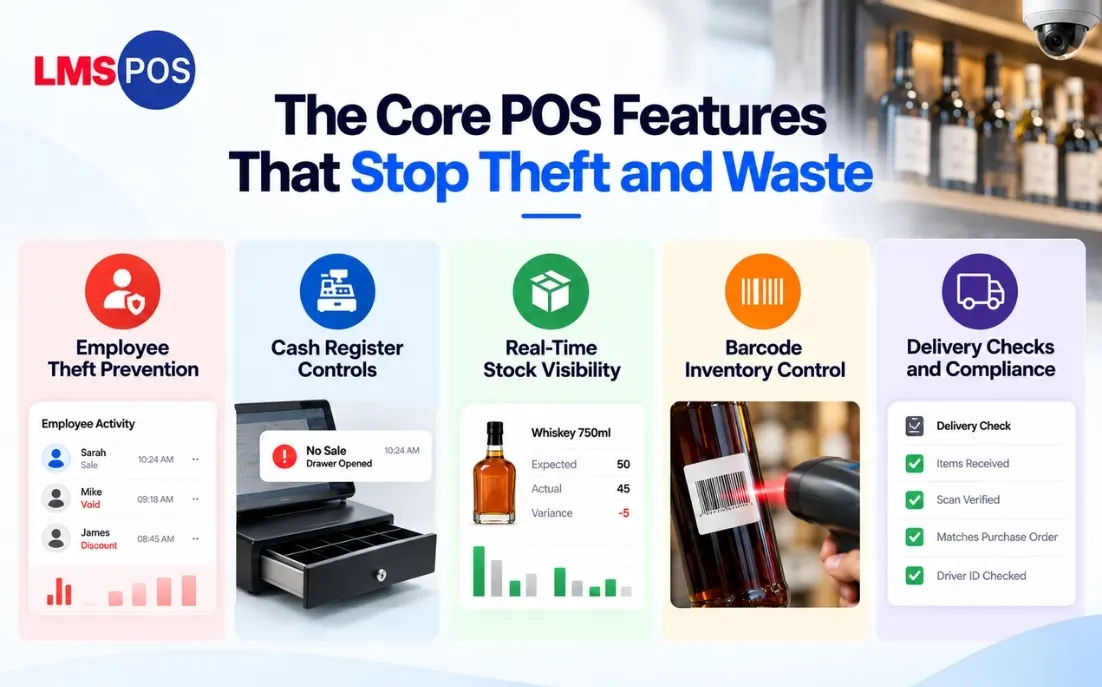
A POS system doesn’t prevent theft and waste through one single feature. It works because several small checks run at the same time, on every sale, every drawer open, and every bottle that moves through inventory.
Here’s what actually does the work and what an owner actually sees on screen once it’s set up.
Employee Theft Prevention
Employee actions can account for a significant share of retail shrinkage, liquor stores included, often through small habits that quietly become expensive, like rounding down a total or letting a friend’s order slide through at a discount.
A POS system prevents this by making every action traceable. Every sale, void, discount, and no-ring transaction gets logged to a specific employee login, with no shared drawer to hide behind.
This is how to stop internal theft in liquor stores in practice: a void report by employee, a discount report flagging markdown patterns, and an employee activity report comparing performance across shifts.
Reviewing these weekly, alongside manager approval thresholds and camera-linked footage, is what turns a POS system for retail theft prevention from a buzzword into something real.
Cash Register Controls
Cash is still where a lot of the damage happens, especially in stores that handle a high volume of small transactions daily. Liquor store cash register theft prevention often starts with a no-sale or open-drawer report, which flags every time the register is opened without a completed sale.
If a drawer is opened forty times in a shift but only thirty sales were logged, that’s a conversation worth having. Many systems also allow stricter drawer policies on top of this, like requiring a manager code for anything outside a normal sale, and the gap between a basic cash register and a full POS system usually comes down to exactly this kind of control.
Real-Time Stock Visibility
Theft is only half the story. Waste is the quieter half, and it’s just as expensive when it goes unchecked for months at a time. A few broken bottles here, a miscount there, none of it feels urgent until the yearly total shows up.
A liquor store inventory management system gives you a running count of what should be on the shelf versus what’s actually been sold, usually surfaced through an inventory variance report flagging the gap between expected and actual stock.
Inventory tracking software for liquor stores makes this visible early, especially once manual counts stop being reliable and a store moves to POS-based inventory management built for exactly this. A five-bottle gap found within a week is a quick fix. The same gap found three months later is nearly impossible to trace.
Barcode Inventory Control
Barcode scanning for liquor inventory control sounds basic, but it’s the foundation everything else sits on. Every bottle that comes in and goes out gets scanned, so there’s no manual counting, no guesswork, and no relying on memory at the end of a long shift.
Some systems also support direct store delivery and purchase order automation, tying incoming stock straight into inventory counts instead of a separate manual check later. Pairing this with regular cycle counts, checking a section of the store each week instead of the whole inventory once a year, catches small gaps while they’re still small.
Delivery Checks and Compliance Controls
Theft and waste aren’t only about the register or the shelf. A lot of liquor store shrinkage prevention actually starts before a bottle is even scanned into inventory, and legal risk often shows up at that same counter.
Delivery verification matters more than people think. If a supplier delivery isn’t checked against what the POS system expects, short shipments and pricing errors can slip through unnoticed for weeks, a loss just as real as a stolen bottle, just harder to spot.
Compliance works the same way. Many systems support liquor store age verification that checks legal age and ID expiry at checkout, and a fine from an underage sale can cost far more than a stolen bottle ever would. Both problems get caught at the same counter, using the same system.
Curious what these reports actually look like inside a real system? The best way to find out is to see it directly. Contact LMS POS , and someone can walk you through the actual dashboard.
Liquor Store Loss Prevention Tips That Actually Work
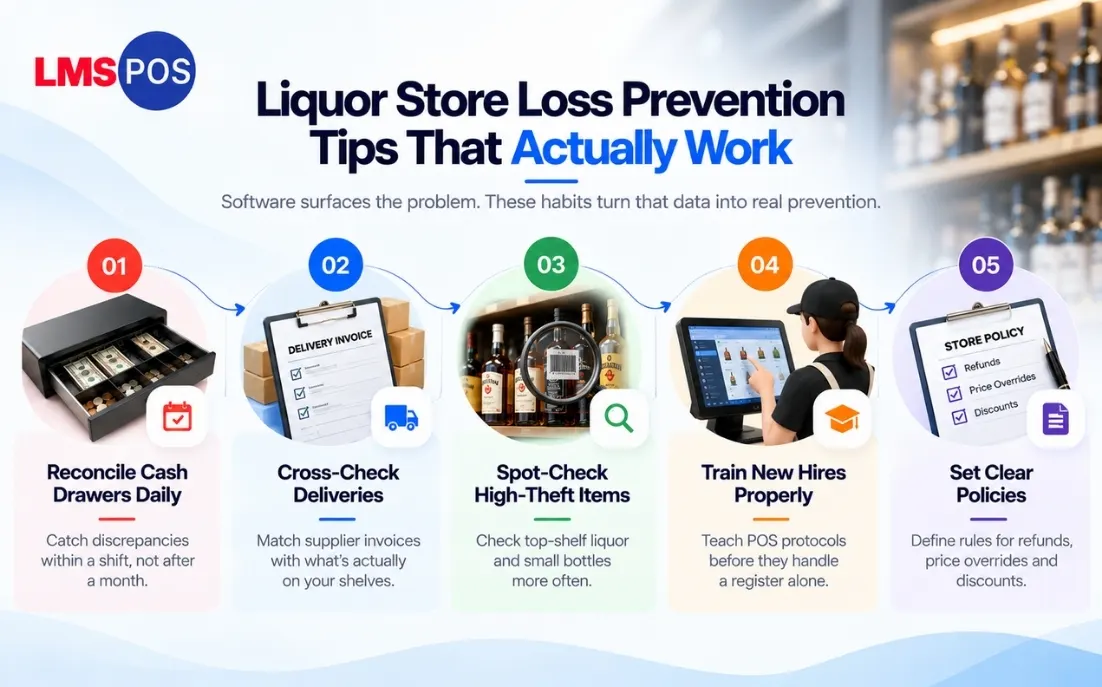
Software alone doesn’t fix theft or waste. It surfaces the problem. What happens after that data shows up is where the real prevention happens, and that part comes down to habits, not features.
A few practices that make an actual difference:
- Reconcile cash drawers daily, not weekly, so a discrepancy gets caught within a shift instead of buried in a month of transactions
- Cross-check delivery invoices against what’s actually shelved, not just what the supplier billed
- Spot-check high-theft items, like top-shelf liquor and small bottles, more often than the rest of the inventory
- Train new hires on POS protocols before they touch a register alone, so bad habits never get the chance to form
- Set clear, written policies for refunds and price overrides, so staff aren’t guessing what’s allowed
Liquor store loss prevention tips only work if they’re followed consistently. A well-configured POS with no one checking the reports is just an expensive way to collect data nobody looks at.
Final Thoughts
None of this is about catching one bad employee or one shoplifter and calling it a win. It’s about building a system where small losses don’t get the chance to quietly become big ones.
The stores that handle theft and waste well aren’t necessarily using the fanciest software. They’re the ones that actually look at their reports every week and treat loss prevention as a daily habit instead of a one-time fix.
Liquor retail has less room for error than most other categories, simply because the products carry more value per square inch of shelf space than almost anything else on a store shelf. That’s exactly why the small checks matter more here than they would somewhere else, and why the habit matters more than the software itself.
Is your current POS actually built for liquor retail, or just adapted to it? That’s where most of these gaps start. LMS-POS is built specifically for liquor and grocery stores, with the tools this article covers included as standard.
Frequently Asked Questions
What is the best POS system for a liquor store?
The right fit depends on store size, state compliance requirements, and whether you need multi-location reporting. At minimum, look for strong inventory tracking, age verification, and detailed employee activity logs as non-negotiables.
How to prevent theft in a liquor store?
A mix of POS-based tracking, camera integration, staff accountability, and clear policies works better than any single fix. Theft prevention is rarely solved by one feature; it’s solved by layering several small checks together.
What is the best deterrent for shop stealing?
Visible cameras paired with active, alert staff tend to work better than either one alone. Shoplifters look for stores where nobody is paying attention, and a POS system that keeps staff informed removes that opportunity.
Can a POS system stop customers from shoplifting, not just employees?
Indirectly, yes. It can’t physically stop someone from concealing a bottle, but real-time inventory alerts and camera-linked transaction data make it much easier to catch losses fast and identify patterns tied to specific times or shelf areas.
How quickly can a POS system start reducing shrinkage?
Owners often start spotting patterns within the first few weeks, since void, no-sale, and inventory variance reports update daily. A more noticeable drop in shrinkage tends to follow once staff know those reports are being reviewed regularly.
Does a liquor store need a cloud-based POS system?
Not strictly, but cloud-based systems make it easier to check reports remotely and get real-time alerts without being on-site. For multi-location stores especially, this becomes far more practical than checking each register manually.
What is shrinkage in a liquor store?
Shrinkage is the gap between what your inventory records say you should have and what’s actually on the shelf. It includes theft, breakage, miscounts, and paperwork errors, not just stolen goods.

Dipesh Shrestha
Dipesh Shrestha is the Co-founder of Compro Boston, maker of LMS-POS. With over two decades of hands-on experience in point-of-sale deployment, payment processing ecosystems, and retail hardware logistics, he specializes in building secure, highly optimized checkout environments.